Choose the moment you want to hear about
Open Settings in Agent Quest and look at the notification categories. Turn finished is the useful everyday signal: the agent has finished its current turn and is waiting for you. Session completed is a different event, for a session that has ended. Enable it if you want that additional alert; it is off in a fresh browser profile.
The sounds distinguish the event categories. A rising two-note chime means it is your turn; a descending chime marks completion; an error alert uses a lower double sound. The sound identifies the kind of event, while the notification and dashboard identify the agent. There is not a different personal melody for each agent.
Set up sound without filling your desktop with banners
Turn on Play a sound, set Volume to a comfortable level and leave Mute everything off. Sound and desktop notifications are separate choices: you can use audio without enabling browser notification banners.
Interact with the dashboard before relying on audio. Browsers can suspend Web Audio until a user gesture. If you also enable Desktop notifications and grant permission, the settings panel offers Send a test; with sound enabled, that test includes a chime.
Leave the dashboard running and connected, then try a short, read-only task in your coding tool. Confirm the alert works in your own browser and audio setup before using it to follow a longer task from another window. A closed or suspended page cannot be treated as an always-on notification service.
Follow several agents without a chorus of interruptions
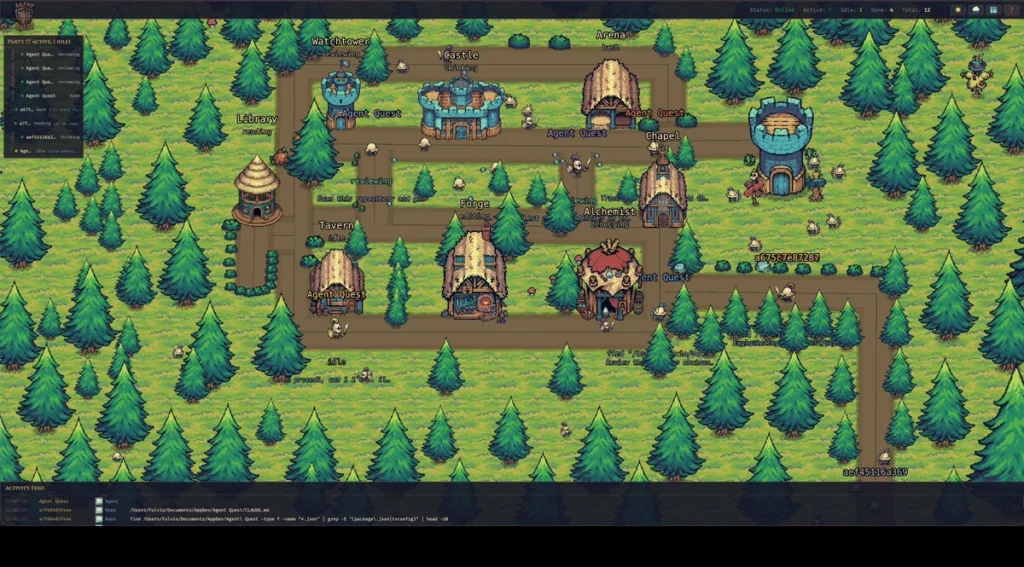
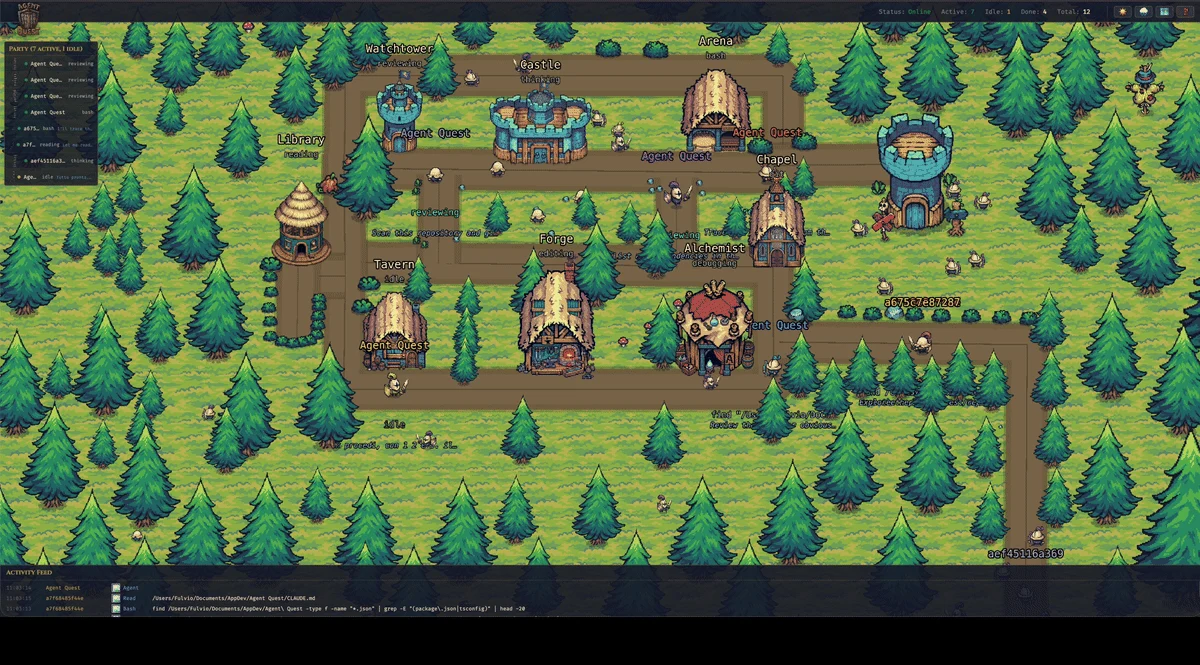
Suppose one main session is explaining a codebase while another checks a proposed change. You can concentrate elsewhere and return when a turn-end alert calls for your attention. Use the notification history to identify the session, then inspect the original conversation before deciding what to do next.
Agent Quest deliberately excludes subagents from these alerts. It also avoids playing a burst of notifications for sessions that were already waiting when the dashboard first connected. That keeps the feature focused on new transitions in main sessions.
In the reviewed implementation, a waiting transition is checked after five seconds and cancelled if the agent resumes work. The error category is tied to a recently reported error when a turn ends, rather than sounding for every failed tool call. This reduces interruptions while an agent is still recovering.
Use it as an attention cue
An alert tells you to look at a session; it does not prove that the requested feature is complete or its tests pass. Read the result when you return, review changes and decide the next step as usual.
Claude Code has an optional Reliable turn-end integration in Settings, which adds a Stop hook to its configuration. It is separate from the sound controls and applies only to Claude Code. Codex is followed through its supported local session logs. Do not enable or change that integration just to adjust the volume.
The practical aim is simple: less repeated checking, and a clear cue when your input is useful. Keep only the event categories that help your own workflow.
Based on the project README and source at revision 6c32b29, reviewed 10 October 2026. Check the current repository for later changes.
Try it with your own sessions
Next: Turn a Second Monitor into a Living Dashboard for Your Coding Agents